
How to Make Your Hair Grow Faster and Healthier
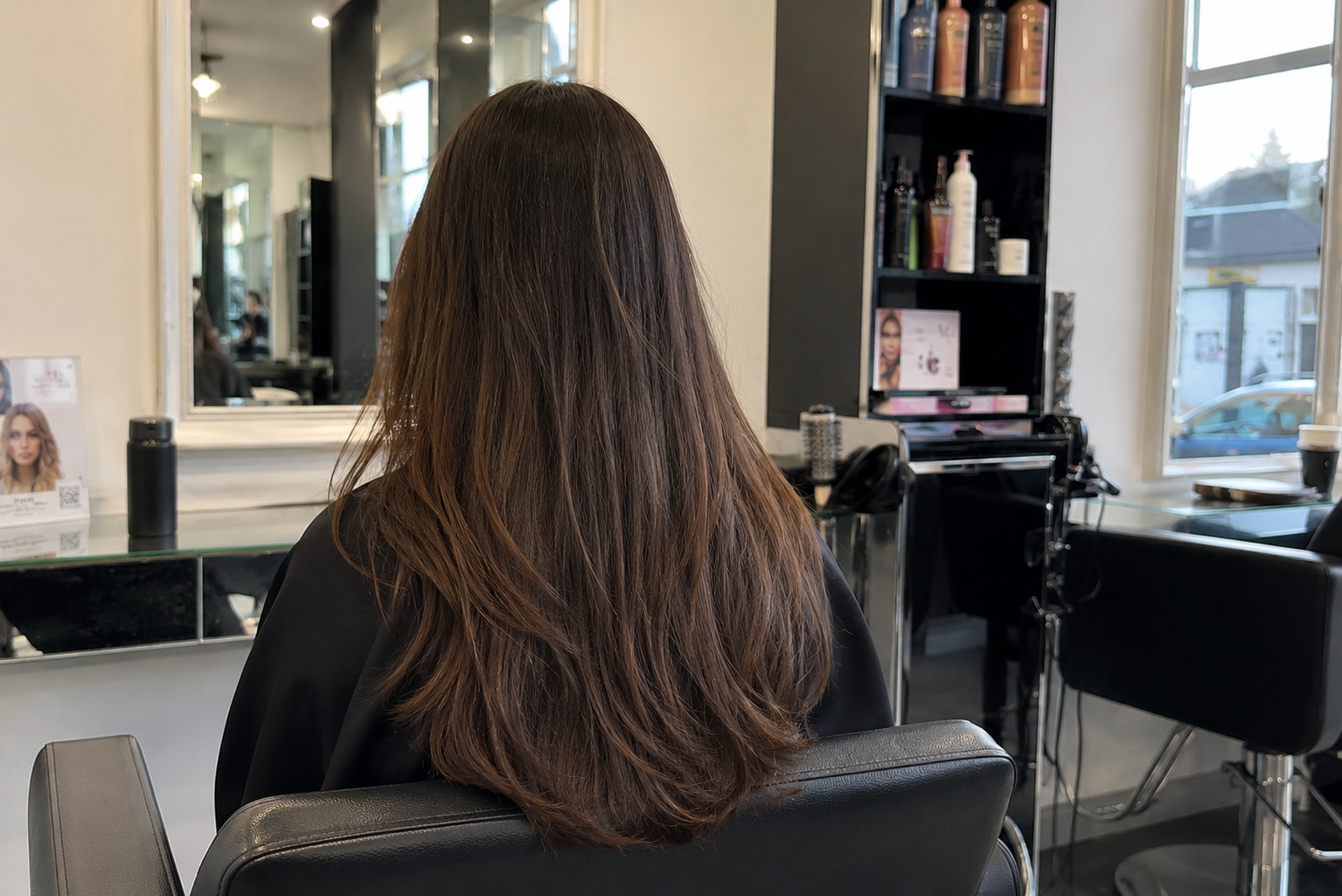
If you are trying to grow your hair and it feels like it has stalled, you are not imagining it, and the good news is that there is plenty you can do. Healthy hair growth is influenced by your habits, your scalp, your diet and how gently you treat your hair, not just genetics. In this stylist's guide from Hair Nova Angel, we explain how hair growth actually works, the habits that genuinely help, the myths to ignore, and how to grow your hair out without the awkward phases.
How Does Hair Growth Actually Work?
Understanding hair growth is the first step to improving it. Hair grows from the follicle at an average of around one centimetre, or roughly half an inch, a month, and every strand moves through a cycle: a growing phase that can last several years, a short transition phase, and a resting phase before the hair sheds and the cycle begins again. It is completely normal to lose fifty to a hundred hairs a day as part of this cycle. Because so much of this is set by genetics, age and hormones, the real question is not how to force faster growth, but how to keep every strand healthy enough to reach its full length.
The Truth About Faster Hair Growth
Here is the honest part most brands will not tell you: you cannot dramatically speed up how fast hair grows from the root, because that rate is largely genetic. What you absolutely can control is how much length you keep. Most people who feel their hair 'will not grow' are actually losing length to breakage and split ends as fast as it grows. So the single most effective approach to hair growth is protecting the hair you already have, so it reaches its full potential length instead of snapping off at the ends.
Does Cutting Your Hair Help Hair Growth?
This is the classic question, and the answer surprises people: trims do not make hair grow faster from the root, but they are still essential for length retention. When split ends are left, they travel up the strand and cause breakage higher up, which is what makes hair look like it has stopped growing. Regular trims every six to eight weeks remove those damaged ends before they spread, so your hair grows longer and looks thicker over time. Book a haircut in Islington to keep your ends healthy while you grow it out.
Everyday Habits That Support Hair Growth
Scalp Health: The Foundation of Hair Growth
Healthy hair growth starts at the scalp, because that is where the follicles live. A clean, well-circulated scalp gives hair the best environment to grow. Massaging your scalp for a few minutes a few times a week can help stimulate blood flow to the follicles, and keeping the scalp free of heavy product build-up prevents clogged follicles. If you struggle with flaking, oiliness or itchiness, addressing that scalp issue is often the missing piece in a hair growth routine. A weekly gentle scalp exfoliation can also lift build-up and dead skin that would otherwise sit around the follicles.
Foods and Nutrition for Hair Growth
Because hair is made of protein, what you eat genuinely shows up in your hair growth. A diet rich in protein gives hair its building blocks, while iron, zinc, biotin, vitamin D and omega-3 fatty acids all support healthy growth and strength. Staying hydrated matters too. You do not need expensive supplements for most people; a balanced, varied diet usually provides what your hair needs. If you suspect a deficiency, it is worth speaking to your GP, as low iron in particular is a common and treatable cause of hair feeling thinner.
Salon Treatments That Support Hair Growth
Professional treatments will not change your genetic growth rate, but they protect and strengthen hair so it retains length. Bond-repair and deep-conditioning treatments rebuild strength in dry or damaged hair, dramatically reducing the breakage that steals your length. Combined with regular trims and good scalp care, these treatments keep your hair in the healthiest possible condition to grow. Our stylists can assess your hair and recommend the right treatment plan for your goals, and pair it with realistic advice on the products worth using at home and the ones that are simply marketing.
Growing It Out Gracefully
The hardest part of growing your hair is often the awkward in-between phase, when layers and old cuts grow out unevenly. A skilled stylist can shape your hair as it grows so it always looks intentional rather than straggly. And if you want length or fullness right now while your natural hair catches up, professionally fitted hair extensions in Islington are a popular way to bridge the gap seamlessly.
Common Hair Growth Myths to Ignore
There is a lot of misinformation about hair growth, and believing it wastes time and money. Cutting your hair does not make it grow faster from the root, however often you hear it. Brushing one hundred strokes a day does not boost growth and can actually cause breakage. Most 'miracle' growth products cannot change your genetic growth rate, and shaving or trimming does not change how thick the hair grows back. The routines that genuinely work are the unglamorous ones: gentle handling, a healthy scalp, good nutrition and regular trims to protect your length.
It is also worth being patient and realistic. At around half an inch a month, meaningful length takes time, and comparing your progress week to week will only frustrate you. Take a photo every couple of months instead, and judge your hair growth over that longer window, where the difference is genuinely visible.
When to See a Professional About Hair Growth
Most slow growth is simply breakage and can be fixed with better habits and care. However, if you notice sudden or excessive shedding, visible thinning, or bald patches, it is worth seeing your GP or a trichologist, as these can have underlying causes such as stress, hormones, or nutritional deficiencies that are very treatable once identified. There is no harm in getting it checked, and early advice usually gives the best results.
Book Your Appointment at Hair Nova Angel
Ready to get your hair growing healthily again? Book online on Fresha, call 020 7993 5484, or message us on WhatsApp. We are two minutes from King's Cross Station, open Tuesday to Saturday, and happy to build a plan to grow your hair long and strong.